

Understanding Non-Binary: Meaning in Urdu
Explore the meaning of 'non-binary' in Urdu 🌈, its cultural context in Pakistan, and how it differs from other gender identities with clear answers to common questions.
Edited By
Henry Wilson
The non-binary flag is an important symbol that represents people whose gender identity does not fit within the traditional binary of male or female. Created in 2014 by Kye Rowan, the flag was meant to give visibility to non-binary individuals, a group that often faces misunderstanding and exclusion even within the broader LGBTQ+ community.
The flag consists of four horizontal stripes, each with a distinct colour and meaning:
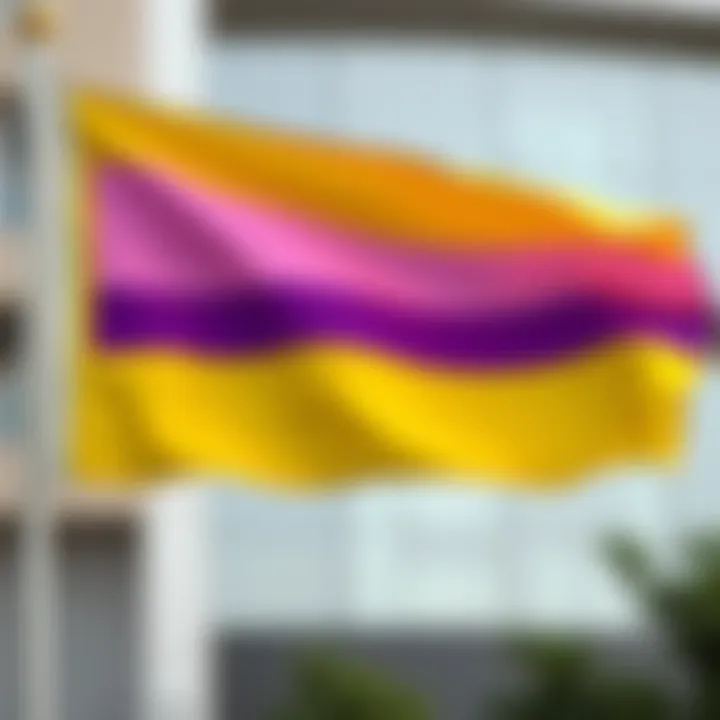
Yellow: Represents people whose gender is outside the male-female binary.
White: Symbolises those who identify with many or all genders.
Purple: Stands for those whose gender is a mix of male and female.
Black: Reflects people who identify as having no gender at all.
These colours were chosen carefully to highlight different aspects of non-binary identities. Unlike other flags in the LGBTQ+ spectrum, such as the transgender flag, the non-binary flag addresses a broader spectrum of gender experiences beyond the male-female or male-female transition narratives.
The non-binary flag serves not just as a symbol but as a way to increase awareness and acceptance, especially in cultures where gender non-conformity remains a sensitive topic.
In Pakistan, conversations about gender identity are often limited due to social stigma and lack of education. The non-binary flag helps create a focal point for advocacy groups and allies to promote inclusivity. Its use in rallies, social media, and awareness campaigns aids in normalising diverse gender identities and encourages people to question rigid gender norms.
For investors and analysts focusing on social impact, understanding such cultural symbols is useful. They reflect social trends that can influence market dynamics, consumer behaviour, and human resource policies in companies aiming for inclusivity. Educators can incorporate knowledge about gender diversity and its symbols like the non-binary flag into curricula to foster respect among students.
Recognising the non-binary flag and its significance is a step towards a more inclusive society where everyone's identity is respected, regardless of gender classification. This understanding can contribute positively not just socially, but also in business environments that value diversity and equal opportunity.
Understanding the origins of the non-binary flag provides important context for its symbolism and why it holds meaning for the LGBTQ+ community today. Knowing who created the flag, when, and under what circumstances helps clarify its role in representing non-binary identities, which often go unnoticed even within queer spaces.
The non-binary flag was designed in 2014 by Kye Rowan, an American non-binary activist. Rowan created the flag to give visibility to those who identify outside the traditional male-female gender binary. This creation was a practical step towards acknowledging non-binary people’s unique experience, which had been largely unrepresented by existing gender flags.
Rowan’s intention was to craft a symbol that non-binary individuals could rally around, especially in places where queer representation often focuses on binary transgender or LGB identities. The flag’s design and colours reflect specific aspects of non-binary identity, making it a recognizable icon for community gatherings and activism.
Introduced in 2014, the non-binary flag emerged during a time when LGBTQ+ awareness was rapidly expanding, but many non-binary voices remained unheard. The mid-2010s saw increased discussions about gender fluidity and non-conforming identities in online spaces and at pride events, creating a demand for distinct representation.
This timing was key because it coincided with broader shifts in LGBTQ+ advocacy, where the community increasingly sought to include diverse gender experiences beyond transgender identities that mainly focus on transitioning between male and female. The non-binary flag provided a fresh symbol for these evolving conversations.
The introduction of the non-binary flag fits into a larger narrative of recognising diverse gender identities within the LGBTQ+ spectrum. Whereas early LGBTQ+ movements focused primarily on sexual orientation and then transgender issues, non-binary identities only recently gained clear visibility.
This shift acknowledges that gender is not limited to the binary male/female division but exists on a continuum. The flag’s creation marks a milestone in this ongoing process, giving non-binary people a banner that reflects their specific realities and struggles within the wider queer community.
Though related, the non-binary flag is distinct from the genderqueer flag, another symbol used by people who reject traditional gender categories. The genderqueer flag was designed earlier, in 2011 by Marilyn Roxie, and features lavender, white, and dark chartreuse colours. While both flags represent gender diversity, the non-binary flag specifically targets individuals who do not fit into male or female categories explicitly.
This difference matters because some non-binary people prefer a unique emblem that distances them from the broader genderqueer umbrella, which can include fluid gender identities and politically charged contexts. Having a separate flag means clearer recognition and fewer misunderstandings about their identity.
Creating a separate non-binary flag was part of a larger effort to establish non-binary individuals as a distinct group with specific needs and experiences. This uniqueness is reflected not just in colour choice but in the flag’s use in activism and visibility campaigns.
In practical terms, this helps communities and institutions recognise the non-binary identity on its own terms. Whether in pride parades, social media, or policy discussions related to gender recognition, the non-binary flag acts as a sign of respect and acknowledgement that non-binary people are not just an extension of the transgender community but have their own identity.
The non-binary flag’s history shows how symbols emerge to meet the need for visibility and representation, helping non-binary people affirm their identity in a world mostly organised around male and female categories.
The colours of the non-binary flag carry specific meanings that represent diverse experiences outside the traditional gender binary of male and female. Each stripe reflects a unique aspect of non-binary identities, providing a visual symbol for those who often feel unseen or misunderstood. Understanding this symbolism helps traders, investors, educators, and analysts appreciate the flag's role beyond a simple design, recognising its impact on awareness and inclusion.
Yellow stands for people whose gender exists outside the male-female binary, highlighting identities that do not conform to traditional gender categories. This colour brings visibility to those who might identify as agender, genderqueer, or otherwise outside typical definitions. For example, in communities where gender discussions remain limited, displaying yellow signals support for gender diversity and the acknowledgement of identities that do not fit neatly into male or female.
White reflects people who identify with many genders, symbolising inclusivity of those experiencing more than one gender at a time or moving between genders. This can include bigender, pangender, or genderfluid individuals. Think of white as a reminder that gender is not always fixed; it can be fluid and multi-faceted. In practical terms, white encourages workplaces and educators to create environments open to varied gender identities, which benefits employee wellbeing and fosters acceptance.
Purple represents individuals who feel their gender lies somewhere between male and female. It often signifies people who identify as genderfluid or who move along the spectrum. Since purple is a mix of blue and pink, traditional colours associated with boys and girls, its position on the flag visually illustrates this blend. For investors or educators, recognising this helps in crafting policies or programmes that respect gender complexities.
Black symbolises those who experience a lack of gender, such as agender or neutrois people. This absence of gender is an important identity that often goes overlooked. Black on the flag embraces this reality and encourages respectful acknowledgement of people who do not identify with any gender. In social inclusion efforts, black reminds us to consider non-gendered experiences and design spaces that do not force gender assumptions.
Together, these colours form a powerful symbol of the non-binary community's diversity. The flag speaks to a spectrum of identities that traditional binary systems fail to represent. Each colour safeguards the dignity of people who identify outside, between, across, or without gender.
Recognising and respecting the flag's colours promotes inclusion — whether in corporate policies, educational curricula, or social discourse — and strengthens visibility for non-binary individuals.
In markets and workplaces, where understanding gender diversity is becoming relevant, this flag plays a part by fostering dialogue. For example, highlighting the flag during Pride events or diversity training offers a visual cue that non-binary identities matter. It encourages organisations to consider how their practices impact people who might not fit usual gender categories.
By appreciating the flag’s colours, business leaders, educators, and analysts can contribute to a more inclusive Pakistan, where gender diversity is acknowledged with respect and clarity.
Gender flags serve important roles in representing the diversity within the LGBTQ+ community. Understanding how the non-binary flag differs from other gender flags helps clarify its unique identity and relevance. This distinction also supports clearer visibility and better respect for each group’s experience.
The non-binary flag features four horizontal stripes: yellow, white, purple, and black. Each colour was carefully chosen to represent different facets of non-binary gender identities, such as those outside the traditional gender binary and those identifying with multiple genders. On the other hand, the genderqueer flag has a simpler design with three stripes—lavender, white, and green. Lavender represents androgyny or queerness, white stands for agender identities, and green symbolises those outside the gender binary. The different colour choices serve to highlight distinct concepts within each flag’s target community.
Understanding these subtle design differences matters practically, especially during pride events or educational workshops. It enables participants to recognise the specific flag and the communities they represent rather than confusing one for the other. For instance, organisers in Pakistani cities like Karachi or Lahore might display both flags separately to ensure proper representation.
The genderqueer flag generally encompasses a broader spectrum of non-normative gender identities, including non-binary, agender, and genderfluid. It aims to create inclusivity across various gender identities that challenge traditional norms. In contrast, the non-binary flag focuses exclusively on those who identify outside the male-female binary but do not necessarily identify as transgender.
This distinction affects advocacy and community building. Non-binary-specific initiatives in Pakistan might use the non-binary flag to communicate a clear identity and voice within larger LGBTQ+ movements, while genderqueer flags cover a broader scope but with less focus on individual identities.
The transgender flag consists of five stripes: light blue, pink, white, pink, and light blue, symbolising traditional male and female colours with white representing those transitioning or of undefined gender. It represents individuals whose gender identity differs from their sex assigned at birth. As transgender identities often overlap with non-binary experiences, the flag is crucial for visibility but distinct from the non-binary flag, which covers those outside the binary regardless of transition status.
In Pakistan, transgender communities have distinctive cultural identities and legal recognition challenges. The transgender flag is commonly used in advocacy for rights under laws like the Transgender Persons (Protection of Rights) Act, 2018, adding a layer of social and political context absent in the non-binary flag’s specific focus.
The agender flag typically has seven stripes with black and white stripes at the ends representing absence of gender, grey for semi-genderlessness, and a central green stripe symbolising non-binary genders. It specifically represents those who identify with having no gender or a neutral gender identity.
While non-binary identities cover a broader spectrum—including multiple gender identities—the agender flag serves those who do not relate to gender at all. This particularity helps in supporting agender individuals within larger LGBTQ+ discussions, and careful use of the flag promotes respect for this group’s specific identity.
The genderfluid flag features five stripes: pink, white, purple, black, and blue. These colours express a fluidity of gender identities and experiences which may shift over time, unlike more fixed identities signified by other flags.
This flag is especially relevant in environments where gender expression can be dynamic rather than fixed, acknowledging a lived experience common in South Asian cultures where gender roles and presentations may vary by context. For Pakistani advocates and educators, recognising the genderfluid flag alongside the non-binary and other flags creates a fuller picture of gender diversity.
Recognising the differences between these flags helps reduce confusion and fosters respect for the many ways people experience gender. Proper use of these symbols in Pakistan can strengthen awareness and support within the LGBTQ+ community and the general public alike.
Visibility plays a critical role for non-binary individuals in Pakistan, where social norms remain mostly binary and traditional. Non-binary people often face isolation and misunderstanding within their families and communities. This lack of recognition impacts their mental health, employment opportunities, and access to services. In Pakistan's largely conservative society, openly identifying as non-binary can lead to discrimination, harassment, or even rejection.
Legally, Pakistan’s framework does not yet fully recognise non-binary identities. While transgender rights have seen some progress—such as the Transgender Persons (Protection of Rights) Act 2018—non-binary individuals often fall through the cracks due to the binary classification of gender in official documents like CNICs (Computerised National Identity Cards). This gap makes accessing healthcare, education, and legal recourse more difficult for non-binary people. Greater visibility through symbols like the non-binary flag can start shifting public perception and encourage policymakers to include diverse gender identities.
Social acceptance is slowly evolving but remains limited for non-binary people in Pakistan. Families, employers, and educational institutes rarely acknowledge non-binary identities, leaving many individuals to conceal their gender expression. This invisibility contributes to exclusion from community support systems and social networks, increasing vulnerability.
Legal recognition is an even bigger hurdle. CNICs require applicants to select male or female, with no option for a non-binary or third gender marker, though some progress on third gender inclusion has benefited transgender persons specifically. Without legal recognition, non-binary Pakistanis face difficulties in everything from banking to voting. Amplifying awareness about non-binary rights, partly through the visibility of the flag, creates space for dialogue about updating policies and recognising gender diversity beyond male and female.
Pride events in Pakistan, though nascent and often facing resistance, have begun incorporating the non-binary flag alongside transgender and rainbow flags. Displaying the non-binary flag publicly sends a clear message that gender diversity exists and deserves respect. It helps carve out a visible space for non-binary identities in gatherings that historically focused on binary or transgender experiences. This presence encourages dialogue, reduces stigma, and highlights the unique issues non-binary individuals face.
Media and education represent other vital frontiers for inclusion. Representation of non-binary people and awareness about the flag in Pakistani media can shift stereotypes and misconceptions. Educational institutions remain behind on gender diversity topics but introducing information about the non-binary flag and associated identities can foster early acceptance. For example, workshops or campaigns in universities can use the flag as a conversation starter to educate about gender as a spectrum, breaking rigid binaries that students and staff often assume.
The non-binary flag is more than colours; it is a tool for raising awareness and building acceptance in a society that rarely recognises gender beyond male and female.
Overall, the non-binary flag helps in promoting visibility, awareness, and inclusion, which are essential steps for social change in Pakistan’s complex cultural and legal landscape. As visibility grows, the hope is to see meaningful support for non-binary individuals reflected both socially and legally.
Using the non-binary flag with respect is essential to honour the identity and experiences of non-binary individuals. This flag is more than colours on fabric; it represents visibility, acceptance, and affirmation for people who often face misunderstanding. Displaying the flag appropriately helps create safe spaces and promotes genuine inclusion.
Community gatherings
Non-binary flag displays at community events like pride marches, discussions, and support groups provide a visual signal of solidarity. Such use encourages non-binary individuals to feel seen and connected while educating the wider audience. For example, during Karachi Pride, carrying the non-binary flag alongside the rainbow flag helps highlight diversity within the LGBTQ+ community. Displaying it at local gatherings affirms that non-binary identities are recognised and respected.
Allies showing support
Allies can use the flag at workplaces, colleges, or social media to signal support for non-binary rights and inclusion. However, allies must do this thoughtfully — the flag is not a costume or token but a symbol of respect. For instance, employers displaying the flag during Pride Month show a welcoming culture, but genuine policies for non-binary staff must back this. Publicly waving the flag without understanding the community’s struggles risks reducing the symbol to mere decoration.
The non-binary flag is sometimes mistakenly thought to represent all LGBTQ+ people or confused with the genderqueer flag. These misunderstandings can dilute its specific meaning.
One common mistake is assuming the flag is interchangeable with other gender-related flags. Avoid this by learning its unique colour meanings: yellow for genders outside the binary, white for multiple genders, purple for those between male and female, and black for absence of gender. Another misconception is using the flag inappropriately in contexts unrelated to non-binary identity, which can cause frustration or offence among those it represents.
To respect the flag, always seek permission before displaying it in settings not led by non-binary people, and avoid using it as a trend or fashion statement. Educate yourself and others about what the flag means, so your support is clear and genuine. This way, the flag maintains its power to uplift and unite rather than confuse or diminish the community’s voice.
Explore the meaning of 'non-binary' in Urdu 🌈, its cultural context in Pakistan, and how it differs from other gender identities with clear answers to common questions.

Explore the meaning of 'binary' in English, from math and computing to everyday use. Understand its diverse contexts clearly and simply. 🧮💻📚

🔍 Explore non-binary identity, challenges, and acceptance in Pakistan 🇵🇰. Understand terminology, social attitudes, and steps for inclusion and respect in society.

Explore the meaning of 'binary' in Urdu 📚, its role in math and tech 💻, and how it fits into Pakistan's education landscape ✍️.
Based on 6 reviews